
 EN
EN
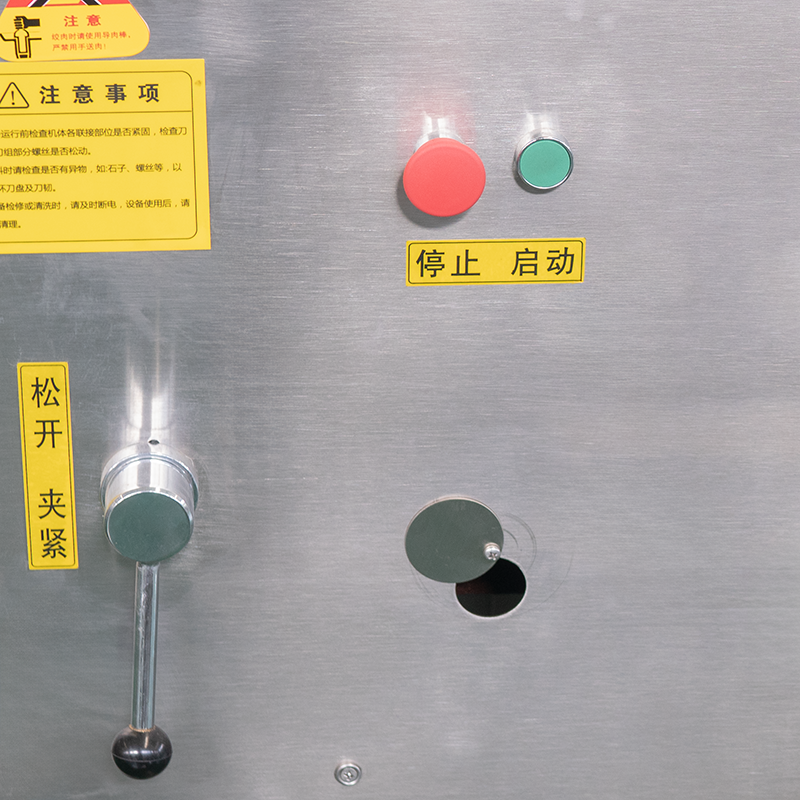
Industrial Meat Grinders: Enhancing Efficiency in Large-Scale Processing
Rising Demand for High-Capacity Meat Grinders (Above 10 kg/min)
Meat processing plants around the world are turning to heavy duty grinders that handle over 10 kg per minute as consumer appetites keep growing without sacrificing their bottom line. According to recent market research from 2023, these big capacity machines cut down processing times by about a quarter when compared to older equipment. Most notably, nearly nine out of ten major meat factories have made it a priority to upgrade to grinders capable of handling at least 15 kg per minute. The trend makes sense given what we know about meat eating habits globally. The Food and Agriculture Organization predicts meat consumption will jump roughly 12 percent by 2030. As a result, manufacturers are investing heavily in grinding technology that keeps production moving smoothly across all those popular products like sausages, burgers, and pre-made meals that line supermarket shelves today.
How Industrial Meat Grinders Improve Throughput and Consistency
Today's meat grinders can hit around 2% consistency in texture thanks to better auger designs and pressure sensors that constantly check performance levels. This kind of control is really important when working with fast food chains that have strict quality standards. The newer automated machines come with blades that adjust themselves automatically, cutting down on the need for workers to stop and fix things by about 40%. These systems stay running most of the time too, keeping up close to 98% operation even when they're running nonstop day after day. Meat processors are seeing roughly 18% more usable meat coming out of premium cuts because the grinding process preserves the muscle structure so well. For businesses selling high end products like gourmet sausages or specialty ground meats, this means bigger profits from each batch processed.
Case Study: European Plant Boosts Output by 40% with Optimized Grinding Systems
A major EU beef processor upgraded its workflow by integrating three 20 kg/min grinders equipped with predictive maintenance sensors and CIP-compliant components. The upgrade delivered:
The system paid for itself within 14 months through reduced waste and downtime, demonstrating how optimized grinding supports both efficiency and food safety in industrial operations.
Automation and Labor Cost Reduction in Modern Meat Grinding Operations
Industrial facilities are achieving 30–50% labor cost reductions through automated meat grinder systems, according to recent European industry reports (2023). These systems integrate motorized feeding, self-adjusting grinding plates, and touchscreen controls to minimize manual intervention.
Labor and Operational Savings Through Automated Meat Grinder Integration
Key improvements include:
- 55% faster changeover times with tool-free disassembly
- 22% energy savings via variable-frequency drive motors
- Real-time error detection that reduces product waste by 18%
Case Study: North American Facility Cuts Labor Costs by 30%
A Nebraska beef processor eliminated three full-time positions per shift after implementing automated grinding lines with predictive maintenance alerts. The system’s automatic blade sharpness monitoring reduced unplanned downtime by 41%.
Trend: Global Adoption of Automated, Traceable Grinding Systems
Asia-Pacific meat processors increased automation spending by 25% in 2023 (Food Tech Journal). The trend favors dual-purpose systems capable of handling fresh and frozen meats while capturing real-time data for USDA compliance and traceability.
Durability, Maintenance, and Uptime: Keys to Reliable High-Capacity Grinding
Industrial meat grinders operating in continuous-processing environments require resilient designs that support long-term reliability. Three critical factors distinguish high-performing systems from those prone to failure.
Design Features That Reduce Downtime in Continuous-Operation Plants
Modern grinders combat wear using carbide-reinforced cutting blades and automated grease delivery systems that lubricate bearings every 500 cycles. Units with modular disassembly capabilities reduce maintenance interruptions by 35%, reclaiming over 180 production hours annually compared to traditional bolt-heavy designs (Food Processing Equipment Journal 2023).
Stainless Steel vs. Composite Components: Impact on Grinder Longevity
Material selection significantly affects equipment lifespan. 304-grade stainless steel grinding plates resist corrosion 2.7x longer than composites in high-fat environments. While composite housings offer 18% lower initial costs, their 14-month average replacement cycle leads to $12,000 higher annual expenses in large-scale operations (Meat Processing Technology Institute 2023).
Case Study: Brazilian Facility Achieves 99% Uptime with Predictive Maintenance
A São Paulo beef processor eliminated unscheduled downtime by deploying AI-driven vibration sensors across its grinding line. Real-time analysis reduced motor failures by 73% and extended bearing life to 8,100 operational hours. Plants using predictive maintenance protocols achieve 99.2% average uptime, far surpassing the 89% seen in reactive maintenance models.
Food Safety Compliance and Hygienic Design in Commercial Meat Grinders
Meeting Regulatory Standards: EHEDG, USDA, and Clean-in-Place (CIP) Requirements
Today's industrial grinders need to meet strict hygiene requirements set by organizations like EHEDG and USDA for food processing environments. The introduction of Clean-in-Place systems has made a real difference in food safety practices. According to Food Safety Tech from last year, facilities using CIP technology see around 92% fewer bacterial issues than those relying on traditional hand cleaning methods. For equipment surfaces, manufacturers are turning to 316L grade stainless steel that satisfies FDA regulations under 21 CFR standards. This material choice alone can slash microbial buildup by approximately three quarters. Another practical benefit comes from designs that allow parts to be taken apart without tools, which cuts down on cleaning time after production runs by roughly 40%. These improvements not only enhance safety but also make daily maintenance operations much more efficient for plant managers.
Case Study: Preventing Recalls at an Australian Processing Plant
An Australian beef processor went 26 months without recalls after upgrading to grinders with HACCP-monitored zones and full CIP compliance. Daily sanitation labor costs dropped 58% through automated wash cycles, with third-party audits confirming 99.9% pathogen elimination rates during routine inspections.
Selecting a Cost-Effective Meat Grinder: Balancing Capacity, Reliability, and ROI
Evaluating Total Cost of Ownership for Long-Term Value
Investing in industrial meat grinders requires assessing 3–5 year operational costs rather than upfront price alone. A 2023 Food Processing Report found plants using TCO models achieved 34% lower expenses by selecting energy-efficient motors ($380/year savings) and stainless steel components (40% longer lifespan than composites). Key cost drivers include:
Plants using standardized auger sizes and off-the-shelf blades reduced repair costs by 60% compared to proprietary systems.
Matching Grinder Specifications to Production Volume Needs
Undersized equipment creates bottlenecks; oversized units waste energy. For plants processing 5,000–10,000 lbs daily:
- 5–7.5 HP motors handle 500–800 lbs/hour without overheating
- #32 grinding plates balance speed (120 RPM) with consistent texture
Peak demand analysis is essential—a North American pork processor reduced waste by 22% after switching from a 15 HP to a 10 HP grinder better suited to its 6,200 lbs/day output.
Future-Proofing with Scalable, Industrial-Grade Grinding Technology
65% of facilities upgrading grinders since 2021 have chosen modular systems enabling:
- Capacity expansion via bolt-on pre-chillers (+30% throughput)
- Compatibility with Industry 4.0 monitoring tools for predictive maintenance
- Multi-voltage support (208V–480V) for global deployment
A recent case study showed a Brazilian plant achieving full ROI in 26 months by adopting grinders with swappable 5–20 HP drive systems, ensuring adaptability to future production demands.
FAQ Section
Q1: What are the main benefits of using high-capacity industrial meat grinders?
A: High-capacity industrial meat grinders reduce processing times, improve product consistency, and enhance meat yields, leading to increased profitability and efficiency.
Q2: How do automated meat grinder systems reduce labor costs?
A: Automated systems minimize manual intervention through motorized feeding, self-adjusting grinding plates, and touchscreen controls, resulting in labor cost reductions of 30–50%.
Q3: Why is stainless steel preferred over composite materials in grinder components?
A: Stainless steel components, such as 304-grade plates, offer longer corrosion resistance and durability, reducing replacements and overall costs compared to composites.
Q4: How do Clean-in-Place systems enhance food safety?
A: Clean-in-Place systems effectively reduce bacterial issues by 92% compared to traditional methods through automated cleaning processes, ensuring compliance with regulatory hygiene standards.
Table of Contents
- Industrial Meat Grinders: Enhancing Efficiency in Large-Scale Processing
- Automation and Labor Cost Reduction in Modern Meat Grinding Operations
- Durability, Maintenance, and Uptime: Keys to Reliable High-Capacity Grinding
- Food Safety Compliance and Hygienic Design in Commercial Meat Grinders
- Selecting a Cost-Effective Meat Grinder: Balancing Capacity, Reliability, and ROI