
 EN
EN
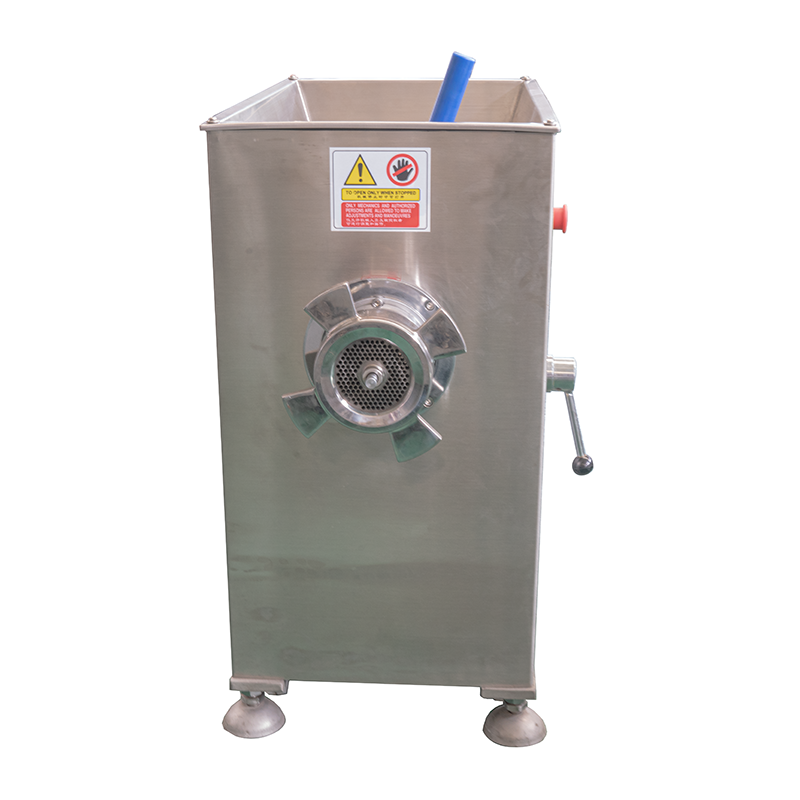
Engineering Mobility: Design Features of Portable Meat Grinders with Universal Casters
Core components that enable durability and easy movement
Portable meat grinders designed for commercial use combine powerful motors that can handle around 300 pounds of meat each hour with durable stainless steel components that last longer and stay clean easier. The machines typically come with sturdy frames and those special polyurethane wheels that let them roll smoothly in any direction even when kitchens get a bit bumpy, and they can support weights well over 150 pounds too. Compared to regular stationary grinders stuck in one spot near the prep area, these mobile versions give chefs flexibility to move them right where needed during cooking or cleaning tasks. This mobility actually makes workflows better, something that most commercial kitchens care about a lot according to recent surveys showing 73 percent consider it important in their daily operations back in 2023.
Material selection and balanced weight distribution for optimal caster performance
Manufacturers looking to get better mobility while keeping things stable often mix different materials strategically. They typically go with corrosion resistant stainless steel for the important bits, engineering polymers where parts need to withstand wear and tear inside, and lightweight aluminum alloys for spots that don't carry structural load. The combination manages to strike a good balance between being strong enough and not too heavy on the scale either. Stainless steel makes up around half the total weight (usually between 45% to 55%), followed by polymers at roughly 20% to 30%, leaving about 15% to 25% for aluminum alloys. Keeping the center of gravity low plus spreading out the weight evenly helps stop equipment from tipping over when moving around or in action, which obviously improves workplace safety. According to some research published in 2022 on ergonomics, commercial kitchens that switched to properly balanced mobile grinders saw nearly a third fewer worker injuries related to strain than places still relying on their old fixed units.
Ergonomic advantages of mobile meat grinder designs
Good ergonomic design makes equipment easier to use while keeping operators comfortable throughout their shifts. The vertical push tubes come with angled feed trays that work well at different workstation heights, which helps cut down on those annoying repetitive motions that lead to strain over time. Swivel casters equipped with locking features let staff move things around easily with just one hand, saving lots of energy when dealing with complicated prep tasks. Those silicone treaded wheels bring noise levels down to about 58 decibels, making them great for open kitchen spaces without damaging floors either. Handles positioned higher up combined with low profile bases encourage better body positioning when pushing, so workers don't get as tired during long hours. Looking at industry data from the latest Food Service Equipment Efficiency Report shows something interesting too. Kitchens that switched to mobile grinders saw prep times drop by roughly 18 percent compared to what they experienced with fixed station models.
Real-World Commercial Applications and Performance Benefits
Improving operational efficiency in delis, butcher shops, and catering services
Meat grinders that roll around on those handy casters are now pretty much a must-have for busy food service places. According to a recent survey from the National Restaurant Association in 2023, butcher shops that switched to these mobile grinders saved anywhere from 15 to 20 minutes each shift on ingredient prep work. These machines take up minimal space thanks to their small size, and those swivel wheels make it easy to move them from cutting stations to cold storage rooms and even into cleaning zones without anyone having to lift heavy equipment. For caterers who constantly deal with changing kitchen setups depending on what events they're handling, this kind of flexibility really makes a difference when working with limited spaces at different venues.
Case study: Regional restaurant chain reduces prep time by 30% with portable meat grinders
A chain of 12 steakhouses saw real gains in how they run their kitchens after switching out those big fixed grinders for portable ones instead. According to their latest operations report from 2024, cooks stopped wasting around 8 or 9 hours every week moving equipment around because these new models have those handy swivel wheels and fit right into workstations. Now staff just wheel the grinder straight from where they cut up the meat over to the cooking area when things get busy, which keeps everything moving without stopping. The change made quite a difference too - protein prep times dropped by about 30% at all the restaurants combined.
Adoption trends in pop-up kitchens and mobile food businesses
According to the latest Food Truck Industry Report for 2023, about 58 percent of those running mobile food operations have started looking at equipment with built-in mobility features like those handy universal casters. For pop-up kitchens especially, having grinders that can be pushed right up against walls when serving customers makes all the difference. After hours, these same units roll neatly into compact storage spots, and they don't need taking apart at all when moving from one location to another. The ability to adapt spaces so easily explains why we've seen around 41% growth in mobile food businesses last year alone. The Mobile Hospitality Trends Index from 2023 backs this up, pointing out how operators increasingly want gear that does multiple jobs while taking up minimal room on their trucks.
User-Centric Advantages: Flexibility, Maintenance, and Space Savings
Enhancing Kitchen Workflow with On-Demand Positioning of the Meat Grinder
Kitchens equipped with universal swivel casters gain much more flexibility in layout adjustments since they aren't stuck with fixed equipment anymore. Staff members simply roll grinders from one area to another across prep stations, near sinks, or into storage spaces without having to lift heavy machinery, which makes moving around during busy service periods much smoother. According to Food Service Quarterly last year, restaurants saw about half the time spent on repositioning when using these mobile setups versus traditional fixed installations. The ability to move things around so easily helps create better organized workspaces that meet today's expectations for flexible kitchen environments. This matters especially for places like delis that see constant customer traffic throughout the day, where good ergonomics really does make workers more productive overall.
Simplified Cleaning and Maintenance Through Swivel Casters and Modular Construction
Getting maintenance done quicker and better becomes possible when equipment features modular designs and wheels that make moving around easy. These stainless steel cases come equipped with fast release parts so everything can be taken apart within about a minute and a half. Plus there are those locking wheels that keep things steady when someone needs to clean them properly. Some folks ran a test last year looking at kitchen operations, and they found out that places with mobile grinders spent roughly 18 minutes less each day on upkeep work compared to fixed installations. Being able to roll these machines straight over to where washing happens cuts down waiting time significantly too, plus helps prevent food particles from spreading between different areas of the kitchen.
Space Optimization for Compact Kitchens and Limited-Footprint Operations
Portable grinders offer substantial space savings in constrained environments:
These advantages make them ideal for food trucks and pop-up kitchens, where 74% of caterers now prefer caster-equipped tools (2024 Catering Trends Report). Their capacity to reconfigure workspace layouts supports the 68% year-over-year growth in mobile food businesses seeking compact, multi-functional equipment.
FAQ
Why are portable meat grinders with casters becoming popular?
Portable meat grinders with casters offer flexibility, improved workflow, and easy movement across food preparation areas. These features save time and reduce physical strain for kitchen staff.
What materials are used in the construction of these grinders?
Most portable grinders use a combination of stainless steel, engineering polymers, and aluminum alloys. This provides durability, resistant to wear and tear, and lightness for mobility.
How do mobile meat grinders improve operational efficiency?
By allowing easy repositioning, they minimize downtime during food prep and maintenance. This improves efficiency, reduces prep times, and can lead to lower labor costs.
What's the reported impact on worker safety?
Studies have shown a significant reduction in worker injuries associated with strain when mobile grinders are used as opposed to fixed ones.