
 EN
EN
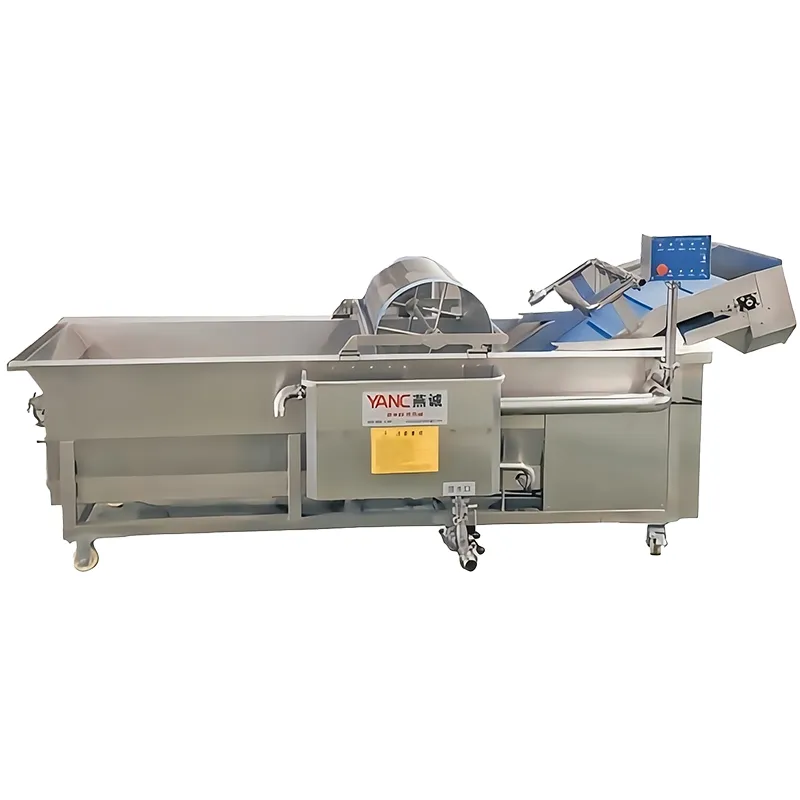
Protecting vegetables from physical damage during industrial washing is a critical challenge for food processors who demand both cleanliness and product integrity. A gentle chain conveyor washing machine addresses this concern by combining controlled mechanical movement with optimized water flow to clean produce without bruising, breaking, or degrading delicate surfaces. Unlike aggressive tumbling systems or high-pressure spray washers, a gentle chain conveyor washing machine uses a continuous belt or chain mechanism that supports vegetables throughout the cleaning cycle, minimizing impact forces and friction-related injuries. This design philosophy ensures that fragile items such as leafy greens, tomatoes, berries, and soft-skinned root vegetables emerge from the wash process in marketable condition.
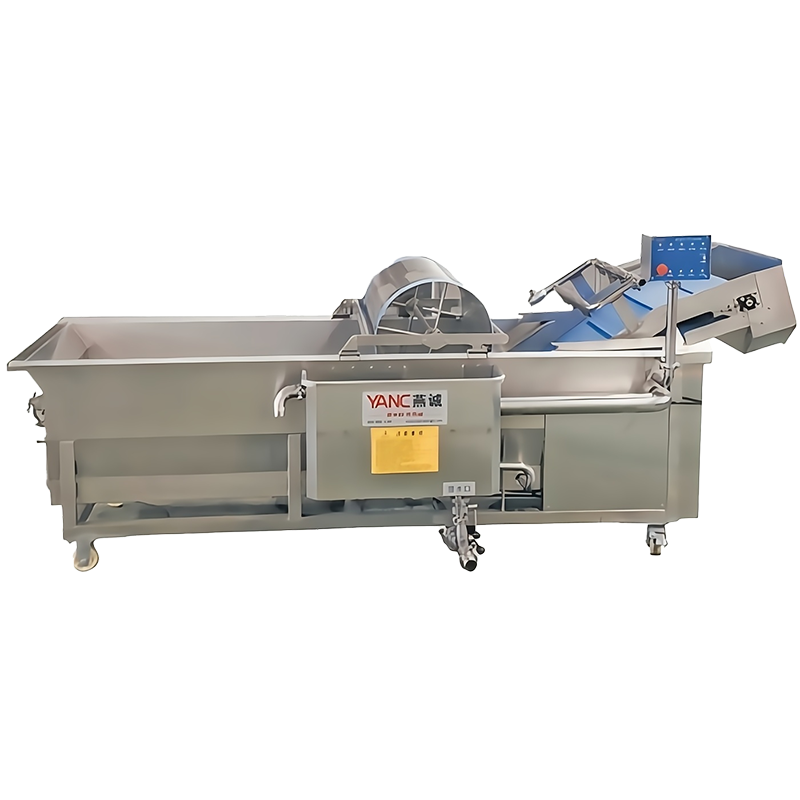
The operational principle of a gentle chain conveyor washing machine revolves around distributing cleaning forces evenly across the vegetable load while preventing sudden acceleration, deceleration, or collisions. Vegetables are placed onto a moving chain or perforated belt that advances through sequential wash zones, each calibrated to remove soil, pesticides, and surface contaminants without causing mechanical stress. Water sprays or submersion baths work in conjunction with the conveyor motion to dislodge debris, while the chain speed remains adjustable to match the fragility profile of different vegetable types. This approach contrasts sharply with rotary drum washers or paddle agitators, which rely on tumbling action that can crack stems, tear leaves, or compress soft tissue. For processors handling mixed vegetable batches or premium-grade produce, a gentle chain conveyor washing machine delivers consistent results that preserve both visual appeal and structural soundness.
How a Gentle Chain Conveyor Washing Machine Minimizes Vegetable Damage
Controlled Mechanical Motion and Impact Reduction
A gentle chain conveyor washing machine minimizes vegetable damage by maintaining stable, linear motion throughout the wash cycle, eliminating the abrupt changes in direction that cause bruising in rotary or oscillating systems. The chain or belt platform cradles vegetables individually or in thin layers, preventing them from colliding with one another or with rigid machine components. Speed settings on a gentle chain conveyor washing machine can be fine-tuned to accommodate delicate items like spinach or robust varieties like carrots, ensuring that mechanical energy input never exceeds the damage threshold for any given crop. This controlled motion principle is especially valuable in facilities processing mixed vegetable lines, where a single gentle chain conveyor washing machine can handle diverse produce types without requiring equipment changeovers or reconfiguration.
Optimized Water Flow and Pressure Distribution
Water delivery systems integrated into a gentle chain conveyor washing machine are designed to remove contaminants through distributed low-pressure sprays or gentle submersion rather than concentrated high-velocity jets that can rupture vegetable skins. Spray nozzles positioned above, below, and alongside the conveyor path create overlapping coverage zones that ensure thorough cleaning without focusing excessive force on any single point. A gentle chain conveyor washing machine often incorporates recirculation loops and filtration stages to maintain water clarity, reducing the need for aggressive mechanical scrubbing that could otherwise compromise product integrity. The result is a washing process that achieves microbial load reduction and visible cleanliness standards while keeping skin tears, stem breaks, and surface abrasions to commercially negligible levels.
Key Design Features That Support Damage-Free Vegetable Washing
Adjustable Conveyor Speed and Residence Time
The ability to adjust conveyor speed is a defining feature of a gentle chain conveyor washing machine, allowing operators to extend or shorten residence time in wash zones based on vegetable type and soil load. Slower speeds give water and gentle agitation more time to work on heavily soiled root vegetables, while faster speeds prevent delicate greens from becoming waterlogged or mechanically stressed. A gentle chain conveyor washing machine equipped with variable-frequency drives enables precise speed control, supporting batch-to-batch consistency and reducing the risk of over-processing that can lead to texture degradation or nutrient leaching. This flexibility makes a gentle chain conveyor washing machine suitable for contract processors who handle diverse client specifications and seasonal crop variations.
Perforated or Mesh Belt Surfaces
Belt or chain surfaces on a gentle chain conveyor washing machine are typically constructed from perforated stainless steel, food-grade plastic mesh, or interlocking links that allow water and debris to pass through freely while supporting the vegetable load. These open-structure designs prevent water pooling and ensure that dislodged soil particles do not re-contaminate clean produce. A gentle chain conveyor washing machine with mesh belts also facilitates drainage immediately after the wash cycle, reducing moisture carryover into downstream drying or packaging stages. The open architecture of a gentle chain conveyor washing machine belt surface additionally minimizes friction points, further lowering the risk of surface abrasions that can initiate spoilage during storage or transit.
Modular Wash Zone Configuration
Many gentle chain conveyor washing machine systems are built with modular wash zones that can be independently activated or adjusted to address specific cleaning challenges without compromising overall gentleness. Pre-wash sections in a gentle chain conveyor washing machine might use low-pressure water immersion to loosen heavy soil, followed by mid-section spray bars for rinsing, and a final zone with sanitizer injection or ozone treatment. This segmented approach allows a gentle chain conveyor washing machine to deliver multi-stage cleaning without subjecting vegetables to repetitive mechanical handling or transfer between separate machines. Modular design also simplifies maintenance and sanitation, as individual zones of a gentle chain conveyor washing machine can be isolated for cleaning or inspection without shutting down the entire line.
Operational Advantages and Application Scenarios
Preservation of Shelf Life and Market Value
Vegetables washed in a gentle chain conveyor washing machine exhibit fewer signs of mechanical stress compared to those processed in tumble washers or high-pressure systems, directly translating to extended shelf life and higher market value. Bruising and surface damage create entry points for spoilage microorganisms and accelerate enzymatic browning, both of which shorten retail display windows and increase shrinkage rates. A gentle chain conveyor washing machine reduces these defects, enabling processors to market premium-grade produce with minimal post-harvest losses. For organic and specialty vegetable growers who command price premiums based on visual quality, investing in a gentle chain conveyor washing machine becomes a strategic decision that protects brand reputation and customer satisfaction.
Suitability for High-Throughput Processing Lines
Despite its gentle operation, a gentle chain conveyor washing machine is capable of handling high throughput rates by scaling belt width, length, and speed within damage-safe parameters. Large-scale processors can deploy multi-lane gentle chain conveyor washing machine configurations to wash several tons of vegetables per hour while maintaining the low-impact mechanical environment that protects product integrity. The continuous-flow nature of a gentle chain conveyor washing machine eliminates batch-processing bottlenecks and integrates seamlessly with automated sorting, cutting, and packaging equipment downstream. This combination of gentleness and capacity makes a gentle chain conveyor washing machine a practical choice for central processing facilities serving retail chains, food service distributors, and export markets.
Versatility Across Vegetable Categories
A gentle chain conveyor washing machine accommodates a wide range of vegetable shapes, sizes, and fragility levels without requiring extensive reconfiguration. Leafy greens, root vegetables, cruciferous crops, and soft fruits can all be processed on the same gentle chain conveyor washing machine by adjusting speed, water pressure, and residence time. This versatility reduces capital expenditure for multi-product facilities and simplifies production scheduling. A gentle chain conveyor washing machine operator can switch from washing romaine lettuce to cleaning radishes with minimal downtime, supporting flexible manufacturing strategies and rapid response to market demand shifts. The ability to handle diverse vegetable types on a single gentle chain conveyor washing machine platform also lowers training complexity and maintenance inventory requirements.
FAQ
What makes a gentle chain conveyor washing machine different from a rotary drum washer?
A gentle chain conveyor washing machine moves vegetables in a stable, linear path on a belt or chain platform, avoiding the tumbling and collisions inherent in rotary drum washers. This design minimizes bruising, stem breakage, and surface abrasions, making a gentle chain conveyor washing machine ideal for delicate produce. Rotary drum washers rely on vegetables tumbling against each other and the drum walls to achieve cleaning, which can damage fragile items. A gentle chain conveyor washing machine distributes cleaning forces more evenly and allows precise control over mechanical stress levels.
Can a gentle chain conveyor washing machine handle heavily soiled root vegetables?
Yes, a gentle chain conveyor washing machine can effectively clean heavily soiled root vegetables by extending residence time in wash zones and using submersion or targeted spray sections. Adjustable speed settings on a gentle chain conveyor washing machine allow operators to slow the conveyor for crops with high soil loads, giving water and gentle agitation sufficient time to remove dirt without requiring aggressive mechanical action. Modular wash zone configurations in a gentle chain conveyor washing machine can include pre-soak sections specifically designed for root vegetables, ensuring thorough cleaning while maintaining the low-impact philosophy that protects product integrity.
How does a gentle chain conveyor washing machine improve vegetable shelf life?
A gentle chain conveyor washing machine reduces mechanical damage during washing, which in turn lowers the incidence of bruising, skin breaks, and tissue compression that accelerate spoilage. Intact vegetable surfaces are less susceptible to microbial colonization and enzymatic browning, leading to longer shelf life and better visual quality throughout the distribution chain. By preserving the structural integrity of vegetables, a gentle chain conveyor washing machine helps processors meet retailer quality standards and reduce post-harvest losses. The combination of thorough cleaning and gentle handling delivered by a gentle chain conveyor washing machine supports both food safety objectives and economic performance.