
 EN
EN
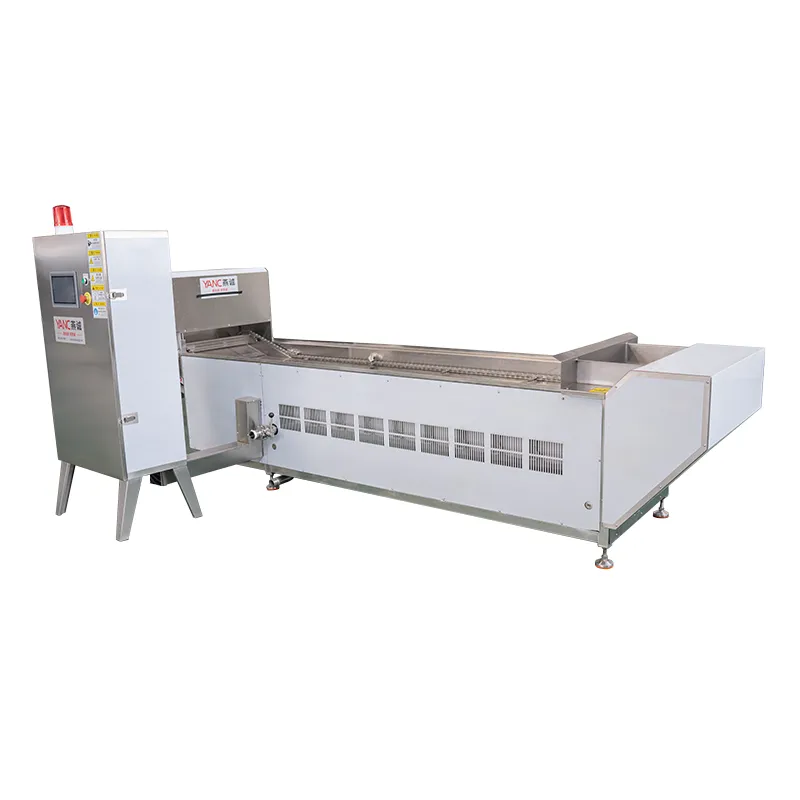
Modern food processing facilities demand equipment that combines efficiency with practical operational advantages. The quick-release vegetable washing machine represents a significant advancement in industrial cleaning technology, offering features specifically designed to address the dual challenges of thorough sanitation and operational flexibility. This specialized equipment integrates innovative design elements that enable food processors to maintain high hygiene standards while simplifying maintenance and relocation tasks that are essential in dynamic production environments.
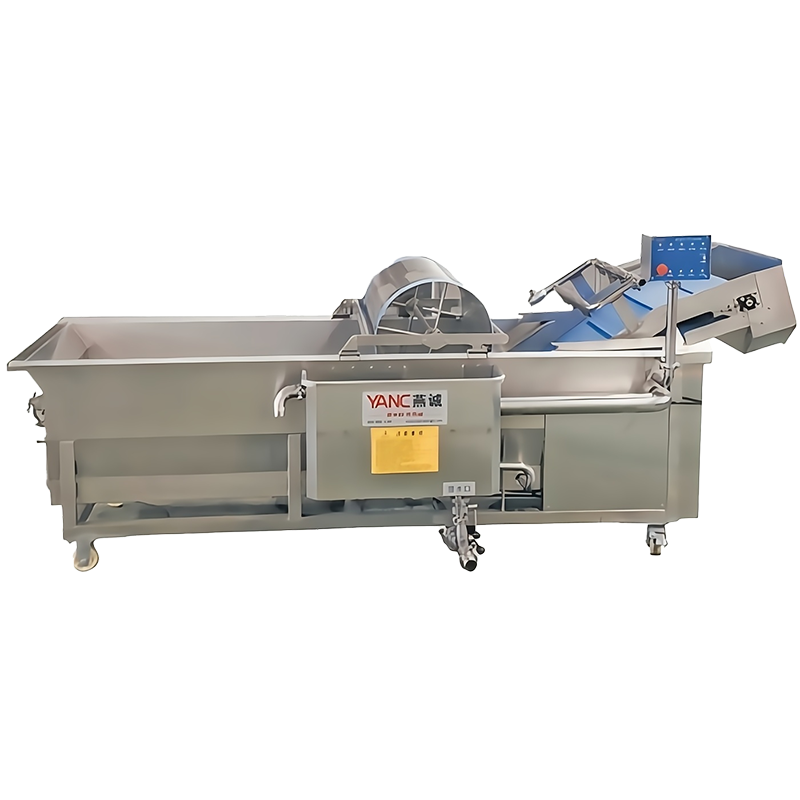
The quick-release vegetable washing machine addresses a critical pain point in food processing operations where equipment reconfiguration and deep cleaning are frequent requirements. Traditional washing systems often involve complex disassembly procedures that consume valuable production time and require specialized tools. By contrast, the quick-release vegetable washing machine incorporates tool-free component separation mechanisms that allow operators to access internal chambers, remove processing sections, and relocate the entire unit with minimal downtime. This design philosophy directly supports the operational agility that modern food processors need to adapt to varying product lines and facility layouts.
Core Design Features Enabling Easy Cleaning
Accessible Component Architecture
The quick-release vegetable washing machine employs a modular construction approach where major components separate without requiring disassembly of fixed mounting points. Spray manifolds, conveyor sections, and filtration housings incorporate quick-connect couplings that disengage through simple lever actions or quarter-turn fasteners. This accessibility transforms routine sanitation from a multi-hour teardown process into a streamlined procedure that operators complete during standard shift transitions. The quick-release vegetable washing machine design ensures that every surface contact area where product residue might accumulate becomes reachable for manual inspection and cleaning verification.
Sanitary Material Selection and Surface Treatment
Food-grade stainless steel construction forms the foundation of the quick-release vegetable washing machine, with particular attention to surface finish quality that prevents bacterial harboring. Electropolished interior surfaces on the quick-release vegetable washing machine eliminate microscopic crevices where organic material could lodge, while radius corners replace traditional right angles that trap debris. The quick-release vegetable washing machine incorporates sloped drainage channels that direct water flow toward collection points, preventing standing water that could compromise sanitation between cleaning cycles. These material and geometry choices work in concert with the quick-release mechanism to create a washing system that maintains hygiene standards across extended production runs.
Transport and Relocation Advantages
Integrated Mobility Systems
The quick-release vegetable washing machine integrates industrial-grade casters with locking mechanisms that provide stable operation during processing while enabling single-person repositioning when production requirements change. Unlike fixed-installation washing systems, the quick-release vegetable washing machine features a balanced weight distribution and low center of gravity that allow operators to maneuver the unit through standard doorways and around existing equipment. This mobility proves particularly valuable in facilities that process seasonal products requiring different washing configurations or in operations where floor space allocation shifts based on production volume demands.
Utility Connection Simplification
Traditional industrial washing equipment often requires hardwired electrical connections and permanent plumbing installations that limit flexibility. The quick-release vegetable washing machine utilizes standardized quick-disconnect fittings for water supply, drainage, and electrical power that comply with food safety regulations while supporting rapid relocation. Water inlet connections on the quick-release vegetable washing machine employ spring-loaded couplers that seal automatically when engaged and release cleanly without tool assistance. Electrical interfaces use industrial plugs rated for wet environments, eliminating the need for licensed electrician involvement when moving the quick-release vegetable washing machine to different production zones.
Compact Footprint Optimization
Space efficiency represents a critical consideration in food processing facilities where every square meter impacts production capacity. The quick-release vegetable washing machine achieves dimensional optimization through vertical component stacking and integrated water recirculation systems that eliminate the need for separate pump rooms or filtration stations. When transport becomes necessary, the quick-release vegetable washing machine design allows certain components to nest or fold, reducing the overall envelope for passage through restricted areas. This spatial consideration extends to storage scenarios where the quick-release vegetable washing machine may need temporary removal during facility maintenance or production line reconfiguration.
Operational Efficiency and Maintenance Benefits
Reduced Downtime Through Quick Access
Production schedules in food processing demand maximum equipment availability, making maintenance efficiency a direct contributor to profitability. The quick-release vegetable washing machine addresses this imperative through design choices that compress maintenance windows. Filter cartridge replacement on the quick-release vegetable washing machine occurs in minutes rather than hours because housings swing open without fastener removal. Spray nozzle inspection and cleaning become routine tasks operators complete during shift changeovers rather than scheduled downtime events. The cumulative effect of these time savings across the quick-release vegetable washing machine operational lifecycle translates to measurable increases in productive capacity.
Operator Training Simplification
Complex equipment often creates training bottlenecks that limit workforce flexibility and increase dependency on specialized personnel. The quick-release vegetable washing machine incorporates intuitive operation interfaces and standardized maintenance procedures that reduce training time for new operators. Visual indicators on the quick-release vegetable washing machine show proper component alignment during reassembly, while color-coded connection points prevent utility hookup errors. This design approach allows food processors to cross-train staff across multiple equipment types more effectively, with the quick-release vegetable washing machine serving as a model for maintainability that reduces operational risk associated with personnel turnover.
Long-Term Durability Considerations
The mechanical simplicity inherent in quick-release mechanisms offers durability advantages over complex fastening systems. Fewer threaded connections on the quick-release vegetable washing machine mean reduced risk of cross-threading or stripped fasteners that can compromise equipment integrity. Spring-loaded couplers and cam-lock mechanisms on the quick-release vegetable washing machine maintain consistent clamping force across thousands of connection cycles without the gradual loosening that affects traditional bolted assemblies. These durability characteristics ensure that the quick-release vegetable washing machine maintains its ease-of-cleaning and transport advantages throughout its operational life rather than degrading into a system that requires increasing maintenance intervention.
FAQ
How does the quick-release mechanism affect cleaning thoroughness compared to traditional washing equipment?
The quick-release vegetable washing machine actually enhances cleaning thoroughness because the rapid disassembly capability encourages more frequent deep cleaning cycles. Operators can easily access internal surfaces that remain hidden in conventional designs, allowing visual verification of sanitation effectiveness. The quick-release vegetable washing machine design eliminates the tendency to defer thorough cleaning due to time constraints, as component separation occurs in minutes rather than requiring extended production halts. This accessibility supports compliance with food safety protocols that mandate regular equipment sanitization.
What training do operators need to safely relocate a quick-release vegetable washing machine?
Basic operator training for the quick-release vegetable washing machine covers utility disconnection sequences, caster unlocking procedures, and pathway clearance verification. Most facilities complete this training in under two hours, as the quick-release vegetable washing machine incorporates safety interlocks that prevent movement while utilities remain connected. Operators learn to verify drainage completion before transport and understand weight distribution principles that prevent tipping during movement. The quick-release vegetable washing machine manual provides photographic guides for connection point identification, further simplifying the knowledge transfer process.
Can quick-release components maintain seal integrity after repeated connection cycles?
Quality quick-release vegetable washing machine designs utilize sealing technologies specifically engineered for repeated cycling. Food-grade elastomeric seals in the quick-release vegetable washing machine incorporate compression geometry that maintains contact pressure across thousands of connection events. Manufacturers specify replacement intervals for wear components, typically measured in years rather than months of normal operation. The quick-release vegetable washing machine maintenance schedule includes seal inspection protocols that identify degradation before leakage occurs, ensuring continuous operational reliability while preserving the convenience advantages that define this equipment category.