
 EN
EN
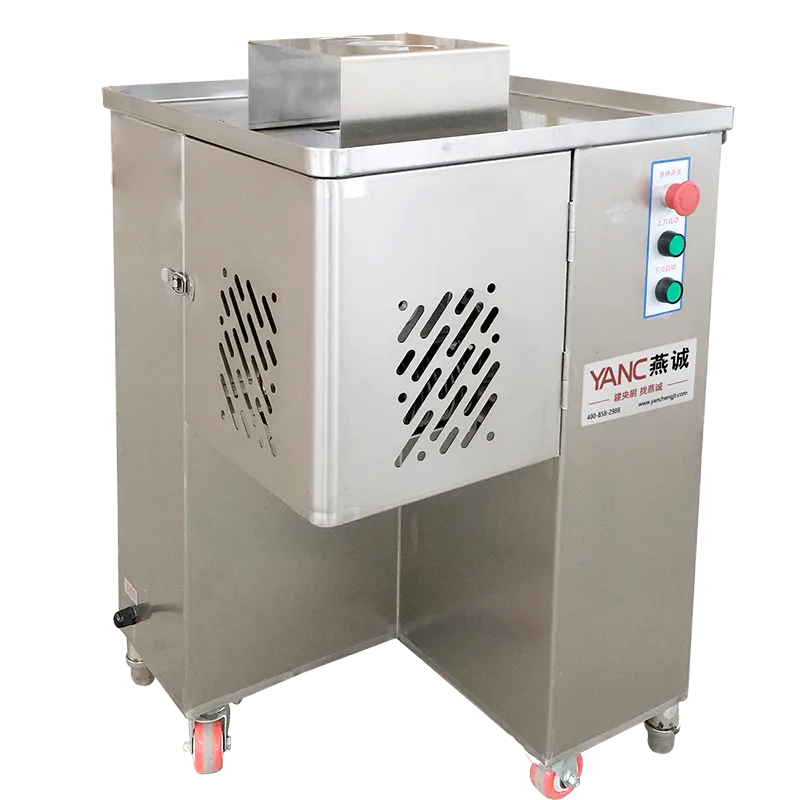
Precision Engineering: Adjustable Thickness Control and Blade Design About Meat Slicer
Micro-Adjustable Thickness Dial and Blade Alignment Mechanisms
Getting precise slices starts with some serious engineering behind the scenes. Most modern meat slicers come equipped with these adjustable dials that let operators set thickness anywhere from super thin at just 0.2mm all the way up to thick cuts around 20mm. The dial gives physical feedback so users know when they've got the right setting locked in place. Those little spring loaded screws along with clearly marked measurements help keep everything calibrated no matter who is operating the machine throughout different shifts. Alignment matters a lot too. Studies show if the blade gets even slightly out of position, say half a degree off, slice thickness can vary by as much as 18 percent according to Springer's findings last year. And don't forget about those dual guide rollers either. They do wonders for keeping things steady while slicing at speed, which means better pressure distribution across each cut. Restaurants benefit greatly from all this precision work. Uniform portions mean less waste overall, saving businesses roughly 11% on food costs every single year.
Smooth vs. Serrated Blades: Impact on Slice Uniformity and Surface Integrity
The way a blade is shaped really affects how well it slices food, what kind of results we get, and which foods work best with different knives. Smooth blades that are usually around 55 to 60 on the hardness scale give us those nice clean cuts without damaging the food much. Great for things like thin slices of prosciutto or when cutting up roast beef where we want everything looking presentable. Then there are those serrated edges that actually perform better on tougher stuff like fibrous meats or even slightly frozen cuts. They cut down on resistance quite a bit compared to smooth blades and stop the knife from slipping thanks to those little ridges along the edge. But of course nothing comes without some downsides worth considering.
- Surface integrity: Smooth blades preserve marbling and visual appeal but require sharpening every ~120 operating hours
-
Throughput: Serrated blades extend edge retention by 40%, though they may introduce micro-tears in tender cuts
Heat treatments such as cryogenic tempering optimize the balance of hardness and toughness. Studies show blade angles between 15°–22° maximize cutting efficiency while maintaining edge integrity during continuous operation (MDPI 2023).
Stable Feed System: Carriage, Belt, and Grip Mechanics
Fixed Carriage Design and Linear Motion Precision
The key to getting consistently good slices lies in having a solid, fixed carriage system guided by those precision ground linear rails. These aren't like the old pivot based designs where the blade would wander around. With fixed guides, the blade stays within just half a millimeter of its intended path during each cut, so there's no annoying wobble that messes up the slice thickness. Made from toughened steel, these parts can handle regular workloads of around 200 kilograms without bending or sagging over time. People who actually use these machines say they need to sharpen their blades about 30% less often once they switch to fixed carriage systems. Plus, the low resistance bearings make moving the carriage much easier on the hands, allowing for smoother cuts even after hours of continuous operation without damaging the product quality.
Non-Slip Conveyor Belt Integration and Product Stability
Conveyor belts with those special textured silicone tops really do make a difference for keeping products stable during transport. The micro-grip patterns on these belts boost friction against regular smooth rubber ones by around 40%, which matters a lot when dealing with cold meat cuts, greasy items, or anything oddly shaped moving fast through processing lines. Some models come with adjustable side guides that keep things centered without squishing them, plus they distribute weight evenly so pressure stays consistent all across the belt surface area. When everything moves smoothly like this, there's no bunching up or inconsistent feeding rates that lead to uneven slices. Manufacturers report seeing about an 18% drop in slicing mistakes once they switch to these non-slip belt systems during their ongoing production cycles.
Smart Automation: Real-Time Thickness Regulation in Modern Meat Slicers
Pneumatic Suspension Systems and Closed-Loop Feedback
The latest generation of meat slicers delivers remarkable consistency thanks to pneumatic suspension systems that adjust blade pressure based on how dense the meat is. Think about the difference between cutting through a tough brisket and something softer like ham. These machines actually have closed loop feedback systems with laser sensors constantly checking slice thickness as it happens. When there's even a tiny deviation beyond plus or minus 0.2mm, the system makes microscopic adjustments to the feed rate almost instantly. According to recent studies in Food Processing Journal from last year, this kind of automation can cut down waste by around 18% compared to when people do the slicing manually. Plus, operators get much better control over slice thickness options ranging from super thin cuts for charcuterie boards all the way up to hearty sandwiches. When paired with big conveyor belts, these systems can keep going at over 1,800 slices per hour while still keeping everything looking uniform. For restaurants and processing plants dealing with large volumes daily, getting consistent portions matters a lot both for controlling costs and making sure customers come back because their experience remains the same every time.
Business Impact: Why Consistent Slicing Drives Commercial ROI
Meat slicers that offer precision can really boost profits in several ways that work together nicely. For starters, being able to cut portions exactly right means restaurants waste a lot less meat. Some places report saving around 15% on ingredients when they switch from hand cutting. This makes buying in bulk much more practical without worrying about losing money on imperfect cuts or looking bad on plates. Another big plus is how fast these machines operate. A single person working the slicer can handle over 500 portions each hour according to industry research. That typically cuts down labor expenses by somewhere between 30 and 50 percent in busy restaurant kitchens. And let's not forget about consistency. When every slice is the same thickness, food cooks evenly and looks great on menus. Customers notice this stuff, which matters for keeping their trust and getting them back again. So when figuring out if investing in a good slicer makes sense financially, restaurant owners need to factor all these benefits into their calculations.
- Yield Optimization: 2–3% product recovery from reduced shaving loss
- Labor Efficiency: $7,200/year savings per full-time equivalent employee
- Waste Reduction: $740k annual savings for mid-sized delis (Ponemon 2023)
- Customer Retention: 22% higher repeat visit rates linked to portion consistency
These compounded benefits typically yield full equipment payback within 8–14 months–and strengthen scalability across multi-unit operations.
FAQ
What is the importance of blade alignment in meat slicers?
Blade alignment is crucial in meat slicers as even a slight misalignment can cause significant variations in slice thickness, affecting portion consistency and leading to increased food waste.
How do smooth and serrated blades differ in their functionality?
Smooth blades provide clean cuts ideal for visually appealing presentations, although they require frequent sharpening. Serrated blades are better for tough cuts and offer extended edge retention but may compromise surface integrity.
How does slice consistency impact restaurant profitability?
Slice consistency directly impacts profitability by minimizing waste, optimizing yield, increasing labor efficiency, and improving customer retention through enhanced portion reliability.
What role does automation play in modern meat slicers?
Automation in modern meat slicers, featuring pneumatic suspension systems and closed-loop feedback, ensures real-time thickness regulation, minimizes waste, and enhances consistency at high slicing speeds.